Cork's former health spa that was envy of the world
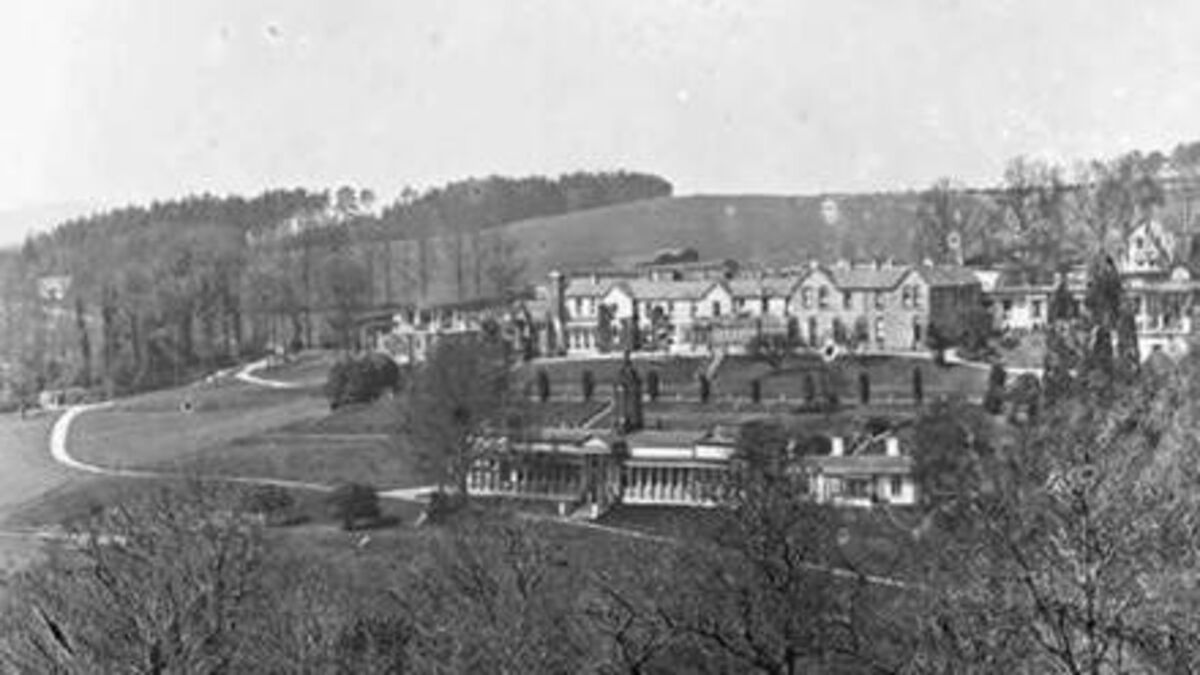
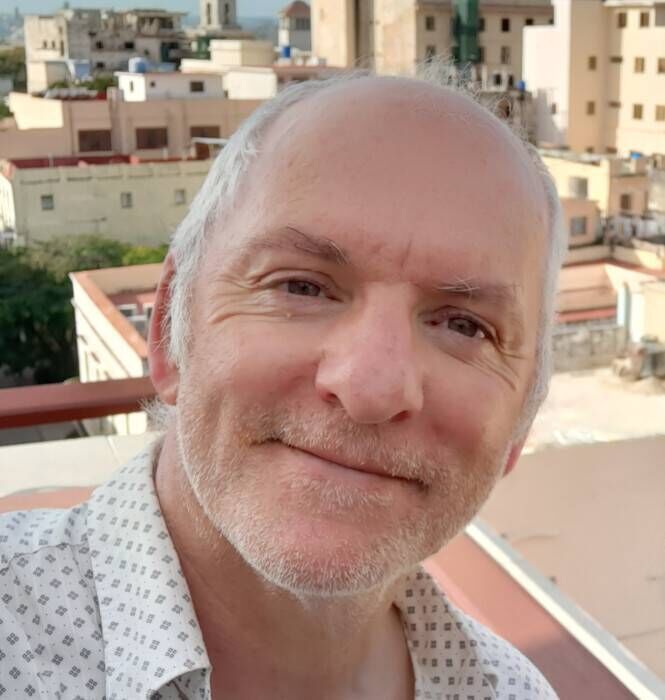
Sinéad McSweeney and Ronan Foley, co-authors of a new book about the once-famed St Ann’s Hill Hydro near Blarney, explain the history of the popular site, which attracted guests like Charlie Chaplin in its heyday
Cork's former health spa that was envy of the world

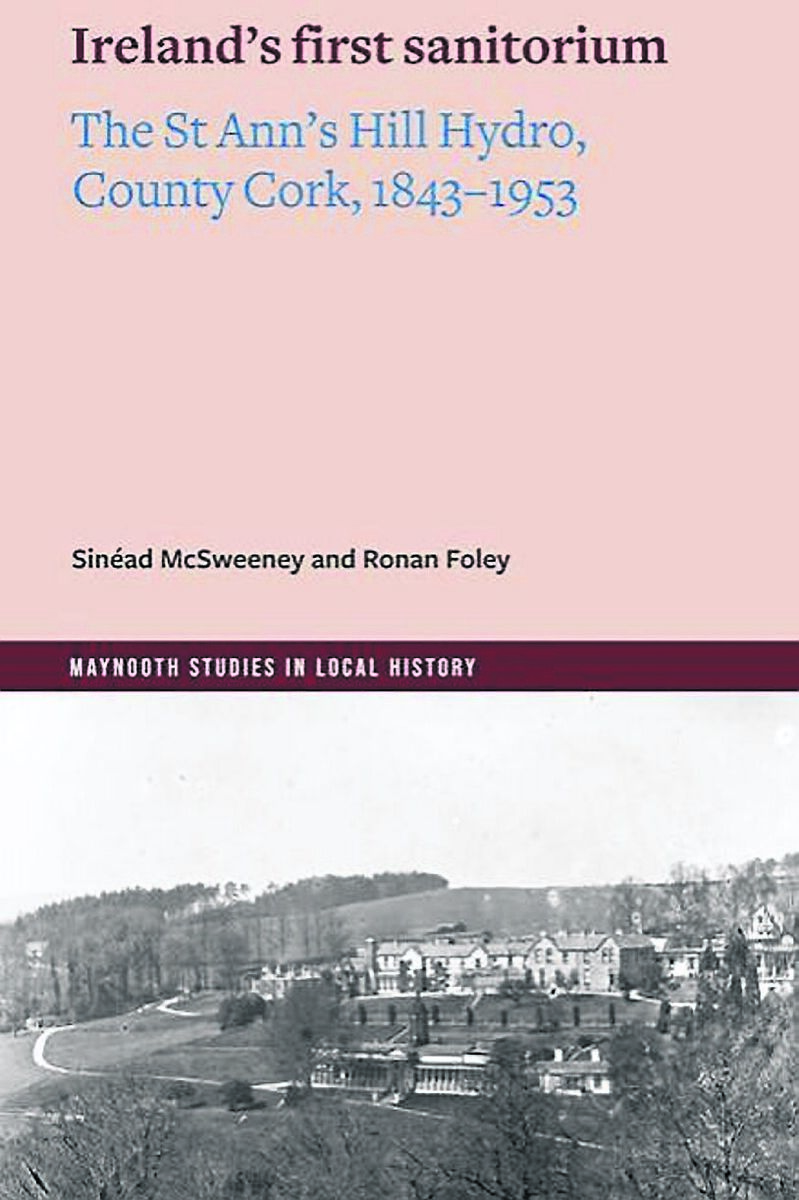
Ireland's First Sanitorium: The St Ann's Hill Hydro, County Cork, 1843-1953

The name St Ann’s Hill Hydro will evoke fond memories for many older Corkonians, yet a newer generation may be unaware of its pioneering and glamorous past.

More than a century and a half ago, a modest country house nestled on a hillside halfway between Tower and Blarney grew into a thriving, self-sufficient health resort that welcomed visitors from home and abroad.

While there have been many short articles about the Hydro over time, as co-authors of a new book about it, we were keen to get something down in book form about its incredible 110-year history, especially given there is almost no trace left of the site.

We combined our research interests to uncover a wealth of new material.

Sinéad used her local historian skills to identify more than 3,000 archival documents and Ronan provided the wider context of the medical history of hydrotherapy.

The basic facts are these. In 1843, Dr Richard Barter, originally from Cooldaniel, near Macroom, established a hydrotherapy centre in his Tower home based on principles pioneered by Vincenz Priessnitz in Gräfenberg (Silesia in modern-day central Europe).

Typical treatments included pain-relieving sitz baths and wet sheet wrapping, grounded in the belief that sweating followed by cold-water cleansing purged toxins from the body.

The treatments proved remarkably popular and a waiting list quickly developed, with members of the Anglo-Irish Ascendancy queuing for admission.

Sinéad McSweeney, co-author of Ireland's First Sanitorium: The St Ann's Hill Hydro, County Cork, 1843-1953

Within 13 years, Dr Barter had also developed and opened a new form of Turkish Bath, blending traditional hammams with Roman heating traditions. After initial scepticism, the mix of cold and hot water treatments met with wide acclaim, soon attracting guests from as far afield as Australia to experience the ‘mad doctor’s’ invention.
In time, the Turkish Bath model spread not just to Cork city but across the globe.

The resort expanded rapidly across the hillside, something we tracked through maps, prospectuses and visitor accounts. The original residence, once described as barely fitting a family of six, was enlarged with extensive wings added on, seemingly at random, to accommodate up to 80 overnight guests.

Known fondly as ‘The Hydro’, the property evolved into a self-contained village and operated a working farm supplying fresh meat, vegetables, and dairy to visitors and staff, complete with an on-site abattoir, greenhouses cultivating exotic fruits, and even its own dedicated post office.

Dr Barter was staunchly teetotal, and while alcohol was strictly prohibited on site, resourceful guests regularly smuggled their favourite tipples into their rooms.

To make travel effortless for guests, a purpose-built station was erected on the Cork and Muskerry Light Railway.

Leisure pursuits were equally lavish on site, with an in-house theatre hosting recitals and dramas alongside amenities for golf, tennis, lawn bowls, a bowling alley, and skating rink.

A cluster of picturesque lodges sprang up across the manicured grounds to accommodate families on long-term stays, establishing the Hydro as a premier holiday destination as well as a health sanctuary.

Ronan Foley, co-author of Ireland's First Sanitorium: The St Ann's Hill Hydro, County Cork, 1843-1953

It attracted many notable figures over the decades, including Father Theobold Mathew, John Francis Maguire, Percy French and Charlie Chaplin.
Bob Geldof’s grandfather, Zenon Geldof, served as the Hydro’s head chef for two years beginning in 1916, while the American Paul Robeson also visited, where he was greeted by Sinéad’s grandfather.

The Hydro was a major employer with a local and international workforce. Physicians, masseurs, and chefs travelled from Germany, while nurses, matrons, and governesses were recruited from across Britain and Ireland.

Housemaids, porters, and farm labourers were drawn from locally as well as from as far afield as West Cork and Donegal.

Forward-looking in technology as well as medicine, the Hydro was, in 1891, one of the first places in Ireland to install a hydro-powered turbine to generate its own electricity.

Electric lighting was introduced throughout the main building and lodges, with daytime power harnessed to run machinery in the dairy.

As a celebrated venue for society balls, dances, and high-society romance, we were able to track the Hydro’s social history in contemporary newspapers through society columns which avidly reported on who attended each event.

Times changed, however, and the Hydro’s fortunes began to wane after World War I, during which time it partially served as an auxiliary hospital caring for wounded soldiers. The decline of its main clientele, the Anglo-Irish, was also significant.

The difficult post-war climate brought soaring food and fuel costs, causing visitor numbers to dwindle to a fraction of their former peak; there was no coal either to run the Turkish Baths.

By the time the Hydro finally closed its doors in 1953, the once-glamorous retreat had quietly transitioned into a retirement home, a poignant final chapter in its faded Victorian splendour.

Ireland’s First Sanitorium: The St Ann’s Hill Hydro, County Cork, 1843-1953

Yet among the communities of Tower and Blarney, the Hydro is still remembered with deep affection by people whose families worked there. Indeed, Sinéad’s grandparents met when they were both working at the Hydro, and it’s also a possibility, that Ronan’s grandmother visited for lunch as a young woman from her home in Inchigaggin House.

When the doors closed for good, 80 people lost their livelihoods, including several fourth-generation Hydro staff members, and we are delighted to be able to include a picture of them in the book.

We were also very lucky to be given access to some family archives by the descendants of the Barter family, to show it was not just an institution, but also a family home.

It is striking that such a chapter of Cork’s heritage with such widespread international influence has been largely forgotten at home, though we continue to receive, almost weekly, new information and accounts.

We hope our new book helps to redress that omission, and to restore the Hydro, along with the dedicated people who sustained it, to their rightful place in history.

Ireland’s First Sanitorium: The St Ann’s Hill Hydro, County Cork, 1843-1953, is published by Four Courts Press and will be launched on Saturday, October 24, at Muskerry Golf Club at 5pm.

Next week is Irish Book Week and there are four nights of events lined up at Waterstones in Cork city.

Monday, October 19: A double launch of Liadain by Ailbhe Ní Ghearbhuigh (illustrated by Chrissie Dervin) and Eoghan Béal by Darach Ó Scolaí (illustrated by Alé Mercado). Both are from Irish language publisher Leabhar Breac’s new collection of picture books for adult readers. See: https://www.waterstones.com/events/book-launch-liadain-by-ailbhe-n-ghearbhuigh-and-eoghan-b-al-by-darach-scola/cork

Tuesday, October 20: The launch of The Cutting Garden illustrated by Erin Connally, a supremely talented watercolourist based in Cork. Written by the Eisner award-winning Darcy Van Poelgeest, this graphic novel is a beautiful addition to the Southern Gothic genre. It explores themes of companionship, family, and sacrifice. See https://www.waterstones.com/events/book-launch-the-cutting-garden-by-erin-connally/cork

Wednesday, October 21: The closing event of this year’s Cork, One City One Book as Rosamund Taylor, author of Filly, is joined by TS Eliot shortlisted poet Billy Ramsell in conversation with author and publisher Eimear Ryan. See https://www.waterstones.com/events/cork-one-city-one-book-rosamund-taylor-and-billy-ramsell/cork

Thursday, October 22: The launch of Mud Angels (Gallery Press) the new collection from award-winning poet John Fitzgerald. See https://www.waterstones.com/events/book-launch-mud-angels-by-john-fitzgerald/cork

All events are at 6.30pm except for John Fitzgerald’s launch which is at 7pm.

More in this section

TV: Recalling the musical traditions around 1798 TV: Recalling the musical traditions around 1798
Bill Murray's TV tour goes to Cork golf course Bill Murray's TV tour goes to Cork golf course
Ruby Bhogal's Irish chocolate Guinness cake recipe TV cook Ruby Bhogal on how Bake Off changed her life...plus two delicious recipes 

Sponsored Content

CS ESB Networks Oct 2026 Got a smart meter? Time to unlock its value with an ESB Networks online account
 ‘I don’t feel like myself any more’. Why Irish women are missing the signs of menopause ‘I don’t feel like myself any more’. Why Irish women are missing the signs of menopause
New build, renovation or replacement? Seven window and door decisions to make before comparing quotes in Ireland New build, renovation or replacement? Seven window and door decisions to make before comparing quotes in Ireland
Contact Us Cookie Policy Privacy Policy Terms and Conditions

© Examiner Echo Group Limited

Add Echolive.ie to your home screen - easy access to Cork news, views, sport and more