'It promises to be a weekend of fun': Cork town to host first Féile na Gaeilge
Inspired by watching the Kneecap movie, Simon Hassett decided to organise a festival as Gaeilge in his home village of Ballydehob. He tells CHRIS DUNNE how the community threw themselves into the idea
'It promises to be a weekend of fun': Cork town to host first Féile na Gaeilge

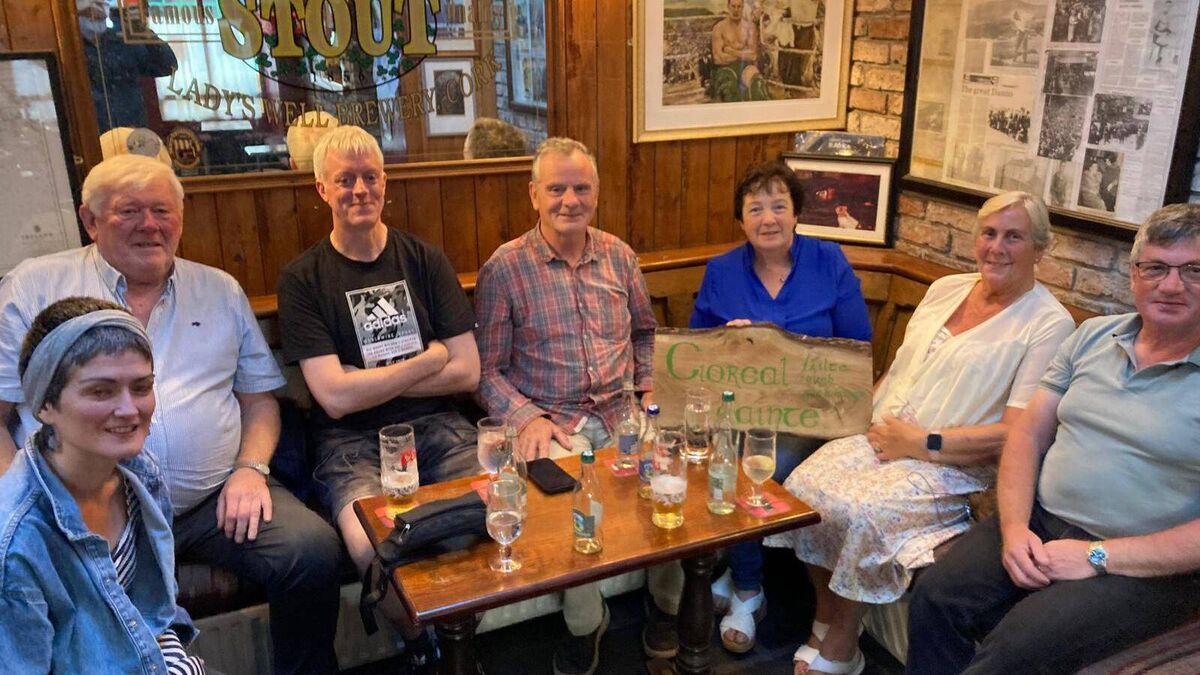
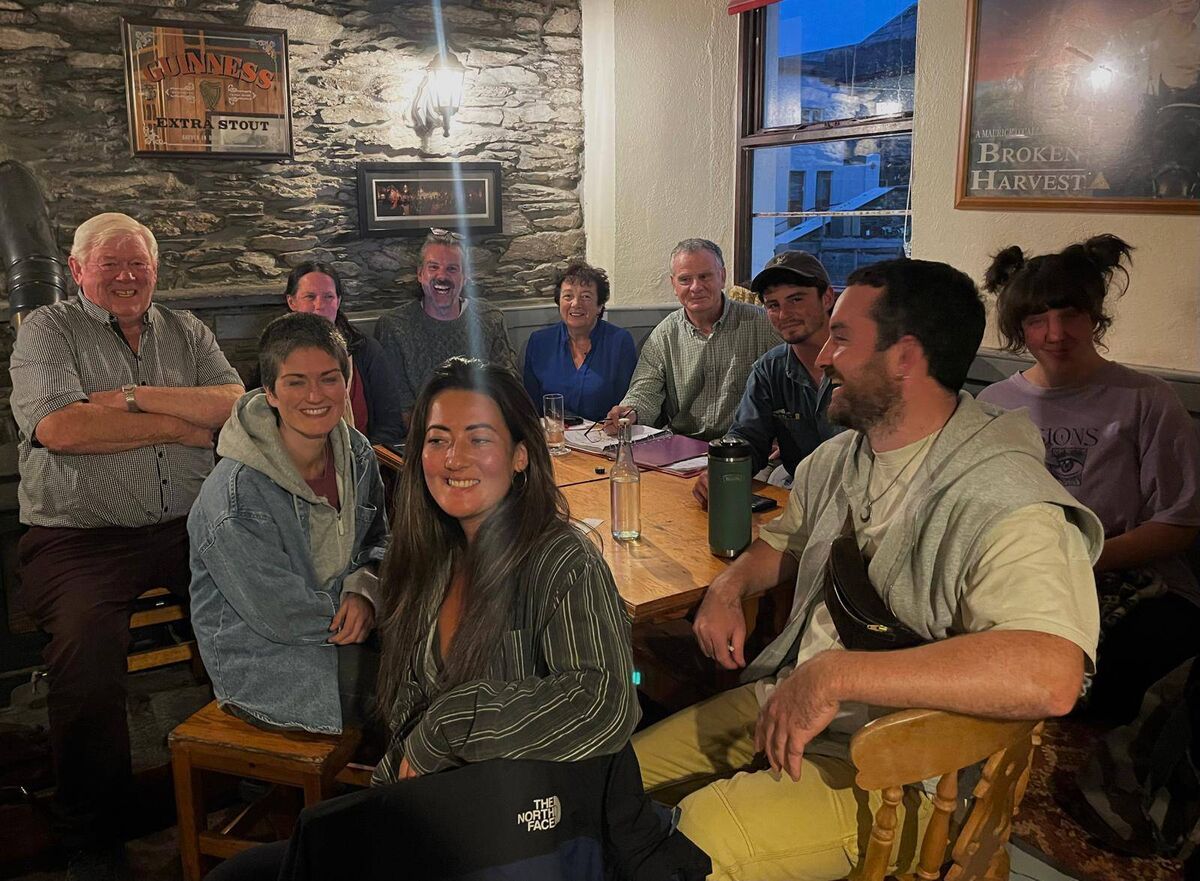
Committee members and helpers for the Féile Na Gaeilge in Ballydehob

It takes a village to organise a whole new festival as Gaeilge. And that’s just what a group of creative and enthusiastic people have done in Ballydehob.
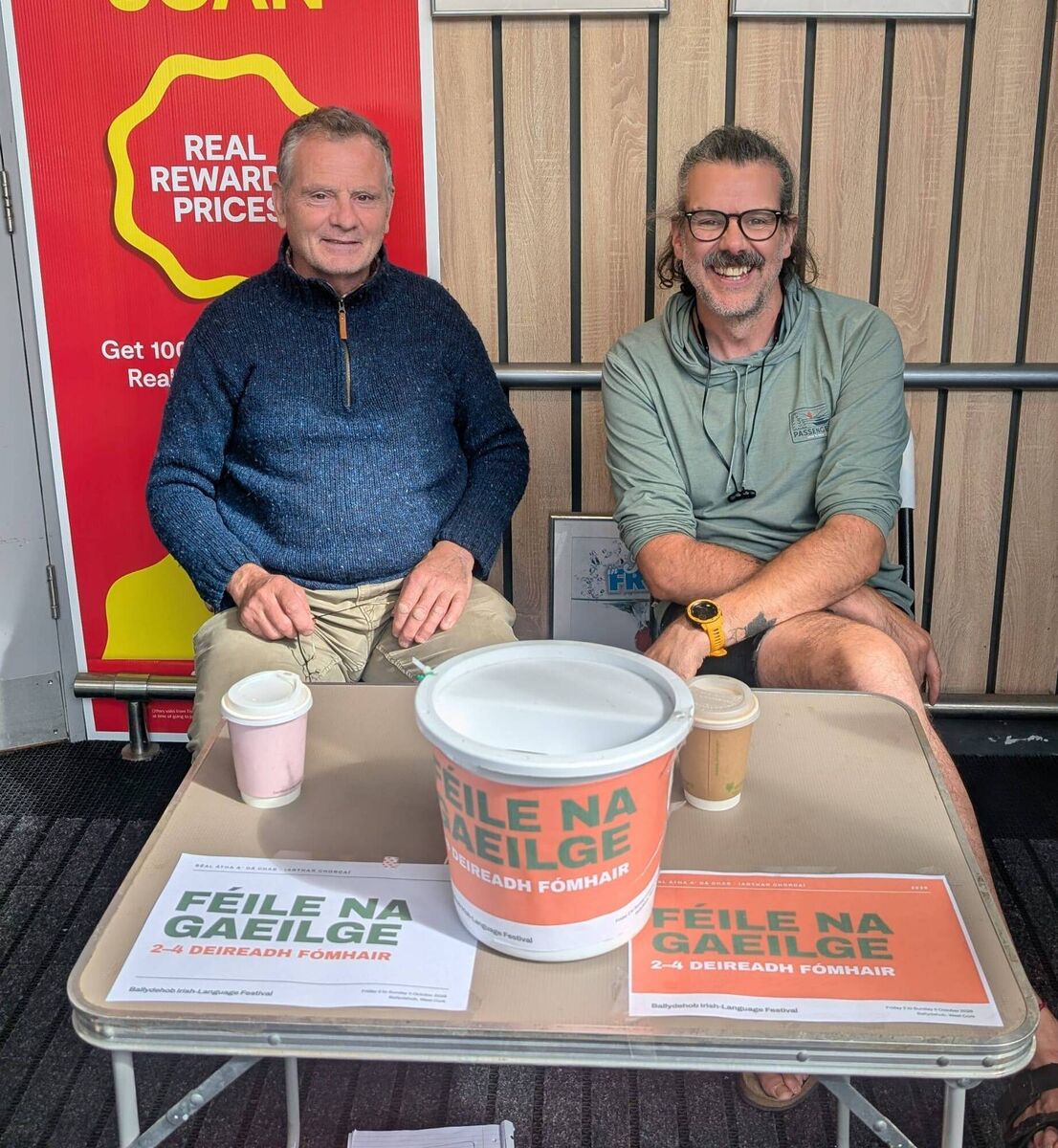
Simon Hassett, from the West Cork village, is the man with the ‘can do attitude’ who initially thought up Féile Na Gaeilge, which takes place this weekend.

“The festival was my idea - originally!” he says.

“So many people have now contributed with original and creative ideas that I can’t possibly call it my own anymore!”

Simon explains: “We had a WhatsApp group for the Ciorcal Comhrá and called a meeting. It snowballed! An elective committee emerged and formed. Bar owners, locals and blow-ins, something for everyone.”

Where did Simon first get the inspiration for Féile Na Gaeilge?

“A friend came home from London in August, 2024, and we went to see the Kneecap movie in Bantry cinema,” says Simon.

“Afterwards, we went for a pint, as one does, and stumbled across a pop-up Gaeltacht in the pub. We sat in nervously and got hooked.”

Wes O'Duinn and Simon Hassett of the Ballydehob Féile Na Gaeilge festival committee

That set Simon off on a lingual journey.
“Irish came back slowly at the start, but faster with practice over the weeks and months.

“In January 2026, I started a Ciorcal Comhrá in Levi’s Corner Bar, my own local in Ballydehob, and I am still delighted with the variety of people who show up either with Irish or a desire to learn and practice it.”

Cormac Levison was another creative mind who had a burst of enthusiasm to get the party, the Feile Festival, going.

“We were talking about all the festivals in Ballydehob - Jazz, Trad, Country & Western Summer Festival, Halloween, etc - when Simon piped up, ‘Cad ina thaobh nach bhfuil Féile Gaelainne againn?” says Cormac.

“Why do we not have an Irish festival? We all thought it was a great idea.”

Ciorcal Comhra is fierce craic.

“It is,” agrees Simon. “We sit around the kitchen table in the back room and some nights we just laugh.

“Anyone who shows up is welcomed and included in the gang. We bond.”

Simon’s friend from England got fond of the grá for the Irish language.

“Vincent, my friend, went back to London and takes night classes in Irish in Lewisham Irish Centre,” says Simon.

“Irish is definitely cool! The young people love it and have it and want it. The gaelscoileanna have produced a generation of Irish speakers. A very positive effect on the language.

“Many parents of families from abroad want to send their children to gaelscoileanna,” says Simon.

“They want their children to grow up knowing and embracing the culture of their adopted country.

“There is now evidently huge pride in the language and the fact we all have it and can speak it. And we are speaking it.”

Ideas for the Féile came in thick and fast.

“It’s not what I imagined at all,” says Simon. “It’s so much better! I’ve stopped nobody’s ideas. I expected gigs and ciorcal comranna, but a tattoo flash and best dressed lady and gentleman are other guys’ ideas. The advantage of a diverse community!”

Simon’s enthusiasm, and that of his fellow Féile committee members and helpers, is infectious, sending a ‘let’s go for it’ feelgood attitude through the vibrant life-force of the village.

“Everyone is talking about the Féile, looking forward to it and wishing it success,” Cormac says.

The cupla focal is alive and well.

“Nobody bats an eye when you go into the bar and order a drink in Irish. Rafael, the French girl behind the bar in Levi’s, takes your order and counts you out your change in Irish as if its her first language,” says Cormac. “It really is amazing.”

“The Féile is definitely going to be a great promotion for the Irish language.

“It is going to bring everyone, locals and visitors, face-to-face, with the Irish language on a daily basis for three days on end, and bring a lot of people into direct contact with native speakers for the first time, as many of the participants are coming to us from Gaeltacht areas.

“It will build what we already have in the village - the ciorcal cainte and the positive attitude that most people have towards the language.”

Féile, which runs from October 2-4, could open up a whole new world to people.

Committee members and helpers for the Féile Na Gaeilge in Ballydehob

“For some, it will probably be the first time they have spoken the Irish language to any great extent since leaving school,” Cormac says.

“Hopefully, it might be something that takes off in other areas also. Perhaps it will act as another template for other, similar festivals.”

Everyone is on the bandwagon.

“We had very modest plans at first,” says Simon. “But then we had an influx of blood. Youngsters with great ideas, great enthusiasm and great skills. Creative, artistic, musical, technological, organisational and administrative skills, and great contacts with Gaeltacht areas and other Gaeilgeoirí from outside the area. The ideas came flooding in. We were off!”

Ballydehob, already known for its artistic community, craft shops and quaint cafés, is well used to being in the spotlight.

“The village is well used to festivals, and they are a great boost to the economy and hopefully this one will be also,” says Simon.

“All the businesspeople in the area are very supportive of our plans.”

Feile isn’t like all the other festivals though.

“I think this festival has more to offer,” says Simon. “This festival is striking a chord with people at a much deeper level.”

Why?

“For years many people have had a negative attitude to the Irish language, or at least to the way it was taught in school,” says Simon. “Others simply go about their daily business without ever thinking about it. This festival is making people think.

“I was recently talking to a woman who had just heard about the festival. ‘I was just thinking?’ she said. ‘Why don’t we talk Irish to each other all the time?’

“Why does it have to take a festival?” asks Simon. “A man said to me that he had always wished he could speak Irish fluently but never thought of doing something about it. Now he is thinking of enrolling in an Irish course.”

What events will be taking place as part of the festival?

“Something for all ages indeed,” Cormac says. “And not only that, but something for people of many different interests.

“Art competitions for the very young, performances by young musicians, a hurling and football blitz.

“For adults, gigs and sessions in the pubs, including a performance by the renowned Brendan Begley. Yoga Nindra, fitness sessions, sauna, soccer, basic conversational tuition, speed comhrá, ciorcal chomhráite, singing workshops, arts and crafts, toponymy (the study of place names), film screenings, road bowling.”

The cráic should be good.

“Yes, there’s a ‘best-dressed’ competition, tattooing - all trí Ghaelige.”

What if a festivalgoer does not possess cúpla focal?

“While all events will be run through the medium of Irish, it must be stressed that fluency is not a prerequisite,” says Cormac.

“It is simply hoped that people will make an attempt to use whatever amount of Irish they have, however little or great.”

As the festival looms, the work continues behind the scenes, headed by committee chairman Tadhg Breathnach-Peelo, to make it a weekend to remember.

“Apart from a public collection and a recently launched GoFundMe campaign, we have done no serious fundraising yet,” says Simon.

“Local businesses have always been very generous in their support of festivals. One business has made a very generous donation of its own volition, for which we are very grateful.

“One of the members has been researching the availability of grants from various sources and progress is being made in that regard.”

All the stops are being pulled out for Ballydehob’s own Octoberfest of Irish language, fun, sport, music and song - and then some.

“Sure, it’s like the Gaeltacht, but its Ballydehob!” says Simon.

“Féile na Gaeilge promises to be a weekend full of fun for all, whatever your level of proficiency in Irish and whatever your interests - a true celebration of our native language,” says Simon.

“And while you’re here, why not avail of reduced rates for tattoos as Gaeilge at our local tattoo parlour to commemorate the occasion!”

I’ll have to think about that one!

More in this section

Stunning images that won awards for Cork photography club Stunning images that won awards for Cork photography club
My Weekend: 'I try to get out to literary festivals and gigs at the weekend' My Weekend: 'I try to get out to literary festivals and gigs at the weekend'
Documentary shines light on Cork family raising both Deaf and hearing children Documentary shines light on Cork family raising both Deaf and hearing children

Sponsored Content

SETU connects Ireland’s southeast to a changing Europe SETU connects Ireland’s southeast to a changing Europe
From graduate engineer to director: A 25-year career helping to shape Ireland’s electricity future From graduate engineer to director: A 25-year career helping to shape Ireland’s electricity future
Brian Brennan, Tax Partner at KPMG in Ireland, President of Irish Tax Institute Budget 2027 should mark the beginning of tax simplification, says KPMG
Contact Us Cookie Policy Privacy Policy Terms and Conditions

© Examiner Echo Group Limited

Add Echolive.ie to your home screen - easy access to Cork news, views, sport and more