Cork beekeeper: 'The problem will get bigger unless we take control'
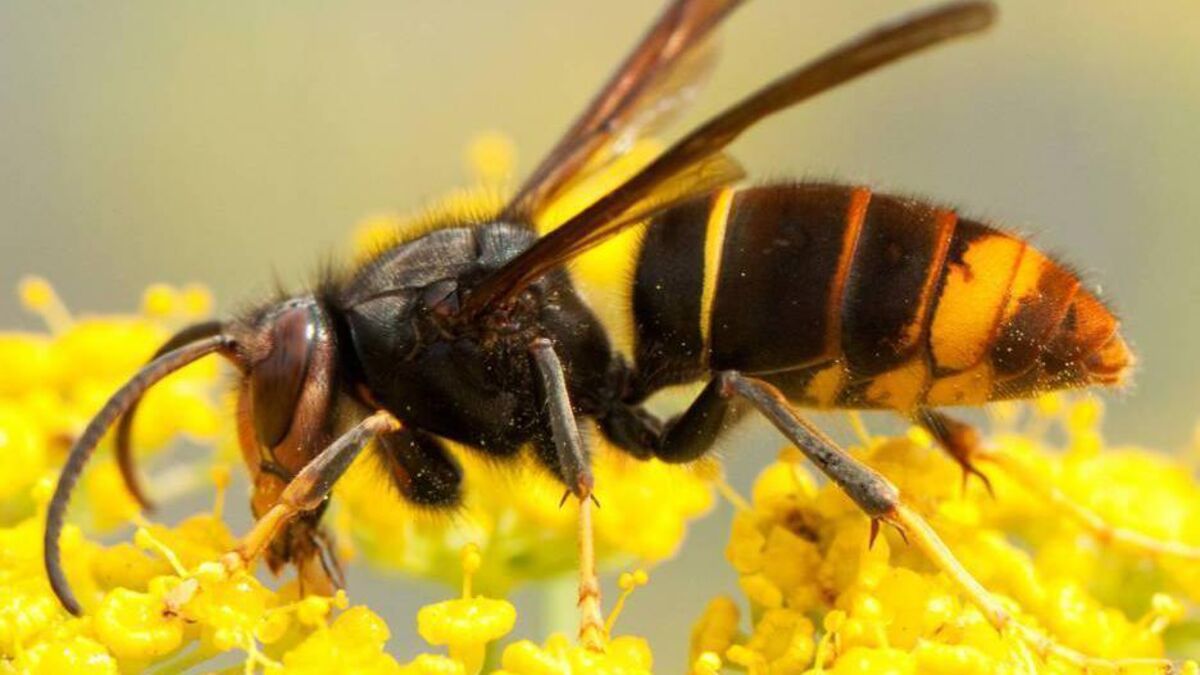
An invasive Asian hornet. Eleanor says 160 Asian hornet nests were discovered in the UK last year.
It’s such a gentle and environmentally-friendly hobby, but Cork’s beekeepers are facing a threat to their survival.
If the Asian hornet arrives from the continent, it could spark an “ecological disaster”, according to one expert in the county.
Eleanor Attridge, chairperson of County Cork Beekeepers Association, is a lecturer and a honey judge, one of only five in Ireland.
The Cork group has been around for more than 100 years and a committee meet every fortnight during the summer months at their apiary at Carrigrohane.
Not only does Eleanor judge in Ireland at places like Fota, Clonmel and Dublin, but also at international competitions, most recently at the World Honey Competition in Copenhagen.
Like wine, honey will take from its environment based on the different plants and flower in the garden. The country honey will have tones of sycamore or hawthorn, whereas the city version will have a different, sweeter taste.
Does the colour indicate quality?
“Not really, the colour will change over the year along with the seasons,” said Eleanor. “Ireland’s honey tends to be darker, especially if the bees are in a mountainous area where there would be a lot of heather, for instance.”
How did she get into this hobby?
“My asthma was becoming an issue because of pollen,” she says, “and honey of course is a great help in alleviating symptoms. Just a teaspoon in the morning, or added to your tea or coffee.
“The best honey will be from your local beekeeper and they will be at your local farmers’ market. Here you will find the honey that is a ‘product’ of Ireland, not ‘packaged’ in Ireland.
“If the packaging says ‘EU and Non-EU blend’, that can be one teaspoon of honey and 99% Chinese golden syrup, so be mindful of what you’re buying.
“Ideally, the producer will be a member of the Federation of Irish Beekeepers and then you’ll know you’re getting an excellent product.”
What is the first step to becoming a beekeeper?
Eleanor says it tends to be mostly older people who get involved as they have the time to nurture their new hobby.
“The first thing to do is a course. We run them throughout the year, the next one is starting in January. It is eight nights online, theory first, and then hands on.
“You need to understand what it’s all about before being brought to the aviary, the same way you need to do a health and safety course before going on sites. The cost is €170.
“When the course is done, a person will decide if it’s for them before proceeding.
“You’ll find a lot of the people that get involved might have a polytunnel already, or they might keep chickens, it’s a natural progression.
“There is an outlay to get up and running, whether it’s buying the bees, or the boxes, bee suit, etc.”
How long do you then have to wait before you have a jar of your own honey?
“It would be at least 12 months. And then you’ll have friends and relations coming out of the woodwork looking for samples!
“It’s such a pleasure as you learn all about your garden and the plants in the summer, you learn all about your bees and pollinators.
“It’s a wonderful way to spend time outdoors, and of course you make new friends through the association.
“And there’s workshops held at Carrigrohane for those that are interested. You might learn how to make mead or other products.”
There’s a threat to our bees from the invasive Asian Hornets, which were spotted in Cork last summer.
Eleanor says this has been a gradual process.
“There were 160 hornet nests discovered in the UK this year. In countries like France and the Netherlands, the situation is worse.
“This problem grows exponentially when it isn’t reacted to immediately. There is a huge issue in mainland Europe, they are struggling.”
What threat do they pose? The response sounds scary.
“They’re twice the size of our bees and they will pick off the bees as they fly to the nest. They rip off the heads and devour the protein from the chest. They want this protein for their young. They are the head of the food order in the insect world.
“In the nest, if the honey bees know they are being attacked, they will stay in the hive and eventually starve to death. “
Do we know the scale of this problem?
“No, we only know the tip of the iceberg. They are coming in on cargo to ports and airports every day of the week and are unchecked, and as we import more, the problem will get bigger unless we take control of the situation.
“The two found in Cork this year, near Ballintemple and in Cobh, could have easily come in from the port. One was found in Dublin port earlier this year as well.
“But if a pallet goes to a distribution centre in the midlands, that’s where the hornet will be released. “
People are urged to contact invasives.ie if they see an Asian hornet.
“Then we can trace the drone and see where they’re flying to,” Eleanor said. “That’s how we find the nest.
“The initial nest will be small and might be in a shed or hedgerow. The queen will need a water and food source, as the nest fills up, they will make another.
“The secondary nest is bigger and could be 30 metres off the ground and harder to spot. It’s made of timber pulp and blends into the background.”
What is the long-term implication of the hornet invasion?
“They will kill off our bees and we won’t have any pollinators. We’ll lose all our fruit as an example. It’s an ecological disaster.”
Are the government doing enough? Is it an issue for the Department of Agriculture of the Department of Parks and Wildlife?
Eleanor is critical of the government’s response.
“One department will say it’s the other. They’re all passing the problem along. The Federation of Irish Beekeepers are left to deal with this.
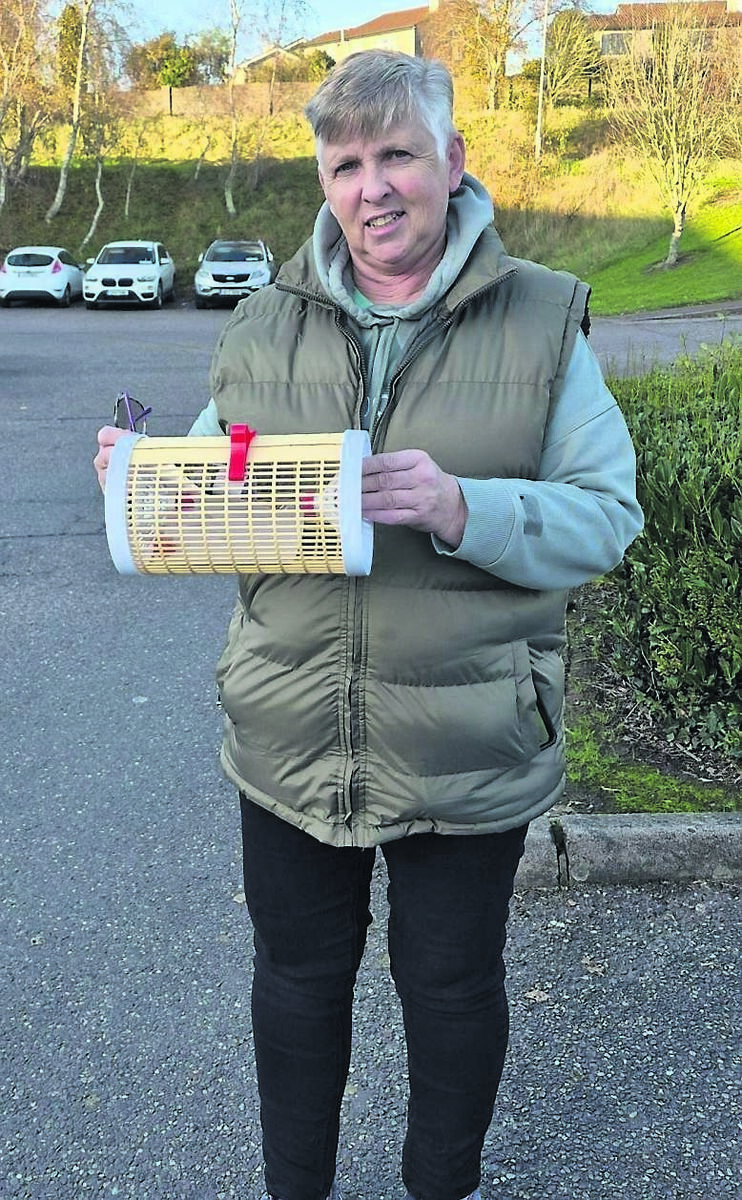
“We’ve set up a GoFundMe page to ask the public to help us. “I recently put the call out for volunteers to take a trap for their garden and monitor it for us. I was thrilled when over 100 people turned up.
“Everyone really cares about this situation. We’ve 1,200 km of coastline so we need all the help we can get in setting up traps.”
What are Cork County Beekeepers doing about this situation?
“We have traps that we order from France, they look a bit like lobster pots. There’s a solution put inside, it’s like a raspberry cordial, this attracts the hornets, and when they go into the trap they can’t get back out.
“Each trap and solution is between €40 and €50, depending on quantity ordered. As soon as one is trapped, the Department of Parks and Wildlife will take over from there.”
Does this also trap our honey bees?
“No, they can leave, the hornets can’t because of their size.”
A final word on what is needed to take control of this situation.
“We need Government funding to buy the traps and solution. We are depending on donations from the public, which is hugely appreciated, but we need to be allocated traps or we will find ourselves in the same situation as mainland Europe; an impossible situation.”
Follow Cork County Beekeepers Association on social media, where you will see the link to donate and the latest updates.






 App?
App?


