Cork author: ‘In Irish culture, like in India, people can be very nosey...’
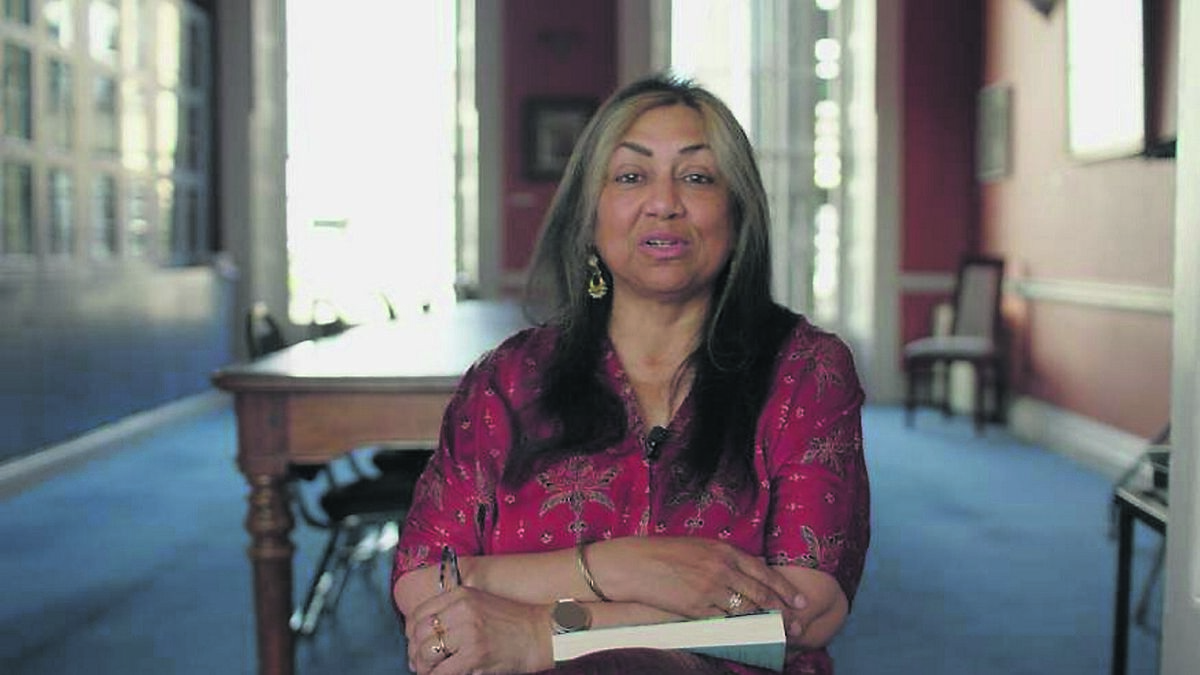
Cauvery Madhavan: “When I go back to India for a visit, whether you like it or not, you end up as a bit of an outsider, looking through the window.”
Such is the distracting beauty of the view from writer Cauvery Madhavan’s house in Glengarriff that she has to face a wall in her study when she is writing.
Cauvery, who is currently working on her fifth novel, divides her time between Straffan in Kildare and West Cork.
She finds Glengarriff more conducive to writing than Straffan as there is “so much peace and quiet there”.
Cauvery, originally from the city of Madras in India, features in the latest episode of the Irish Writers’ Centre’s video series, Dublin: One City, Many Stories.
Titled An Island Of Many Nations, this new instalment explores identity, belonging and creativity through the voices of writers who have made Ireland their home.
Living in Ireland for nearly 40 years, it was Cauvery’s husband’s job as a doctor that brought the couple here, and they were initially based in Sligo.
After two years, they went to England and later moved to Limerick followed by Dublin where Cauvery’s husband works at St James’s Hospital.
“We were both 23 when we came to Ireland. It was like one big adventure really,” said Cauvery.
“Sligo was such a gentle introduction to Ireland. We came from Madras with a population of over eight million at the time. Sligo town had about 15,000 people.”
The biggest culture shock was “how conservative Ireland was,” she says. “That kind of slowly dawned on us.
“I had come from a fairly busy job as a copywriter in an advertising agency. When I arrived in Sligo, I didn’t have a work visa. I was on a company spouse visa. I had a lot of time on my hands.
“I read a lot and listened to the radio, especially to Gay Byrne. It was a slow revelation as to how strangled the country was at that time by the orthodoxy of the church. And yet you could see how much people got out of their faith.”
About 20 years after first arriving in Ireland, Cauvery started writing fiction. By then, she had had her three children. She is full of praise for the Irish Writers’ Centre.
“It’s so supportive of writers. It’s unique. I don’t think it exists anywhere else in the world. People cheer each other on and hold each other’s hands.
“Writing is such a lonely, lonely job. Even if you enjoy it, you can’t take that away.”

In the video, Cauvery speaks about the collegiality of writers in Ireland. “Nobody is your rival.” She says she doesn’t want to come across as a Pollyanna.
“But I’ve seen the support between writers. Fiction writers like Cathy Kelly and Sheila Flanagan champion each other. It’s such a wonderful thing to see.”
Cauvery found the Irish Writers’ Centre a great place in which to write.
“I wrote half of my third book, The Tainted there, many years ago.
“I used to park my car in front of the children’s school, take a bus into town and go to the Irish Writers’ Centre to write.
“For two years, I treated writing that novel as a job. I would write for hours and then take the reverse journey to collect the children.
“It’s so fantastic that you can just walk in there (for a small annual membership fee) and be part of a really thriving community with support.”
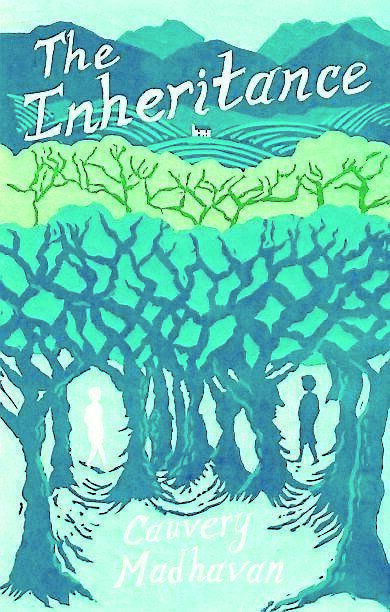
The Inheritance is the title of Cauvery’s most recent book. Writing in a genre that she describes as light literary fiction, and it is set in Glengarriff.
“It’s about a young man of London/Irish stock who inherits a house in Glengarriff from where his family originated.
“Set in the 1980s, it deals with what happens to him when he moves to West Cork.
“There’s a thread running through the book about the O’Sullivan Beara story from 400 years ago.”
A voracious reader, Cauvery reads everything “except for horror”, adding: I would not be a literary snob at all. It’s important to be curious as a writer.
“Both Irish and Indian cultures are very nosey. The people don’t mean any ill at all. They’re just genuinely interested about where people come from.
“Of course, because of political correctness, people are afraid to ask. Even just saying ‘where are you from?’ can be a loaded question. I think that’s a pity.
“I’ve been in cafés and restaurants with my daughters, aged 34 and 37, and my son, aged 33. I might ask the person serving me where they’re from. My children cringe. But I sincerely want to know.”
Asked if she has been subject to any racism in Ireland, Cauvery says: “Not especially, except for one or two very random incidents a good few years ago. But that doesn’t discount the fact that it happens.
“But it’s not what we are as a nation. I used the word ‘we’ because I genuinely consider myself Irish.
“One of my daughters has married a Kerry lad and I have a mixed race grandchild. I’m totally invested in Ireland.
“When I go back to India for a visit, whether you like it or not, you end up as a bit of an outsider, looking through the window.”
Cauvery, who is one of the judges of the Irish Novel Fair, is “blown away” by the writing currently coming out of Ireland. Her novels are on the U.S school curriculum.
“That is such a thrill for me. Also, I have been given the massive honour of being the Charles A Heimbold Jr chair of Irish studies at Villanova University in Philadelphia. I’ll be teaching there for five months from next January and will be the writer-in-residence there.”
A whole new chapter in the adventures of this accomplished writer.

App?