Book gives new slant on 1970s Ireland
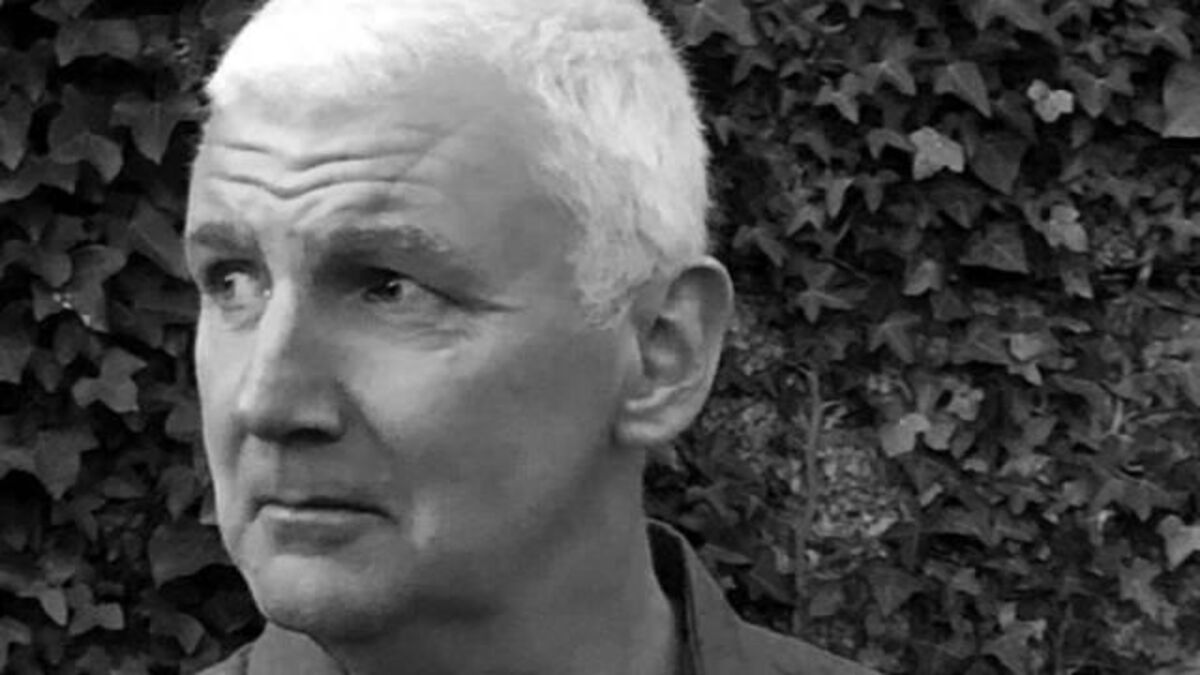
Author C.J McCarthy
I DON’T think there’s any point in pretending that I’m the kind of fellow who just makes up his mind to do something and then swings an unstoppable will behind that decision.
I very gradually and unconsciously build up a ‘head of steam’ and only realise that I’ve decided to do something ‘after the fact’, in retrospect, and after I’ve told so many people that there’s no way back.
I’ll eventually bestir myself to do something because not venting that ‘head of steam’ will result in the condition - the national obsession - that dogged all our 1970s childhoods and to which so many ailments, national and personal, could be traced: trapped wind.
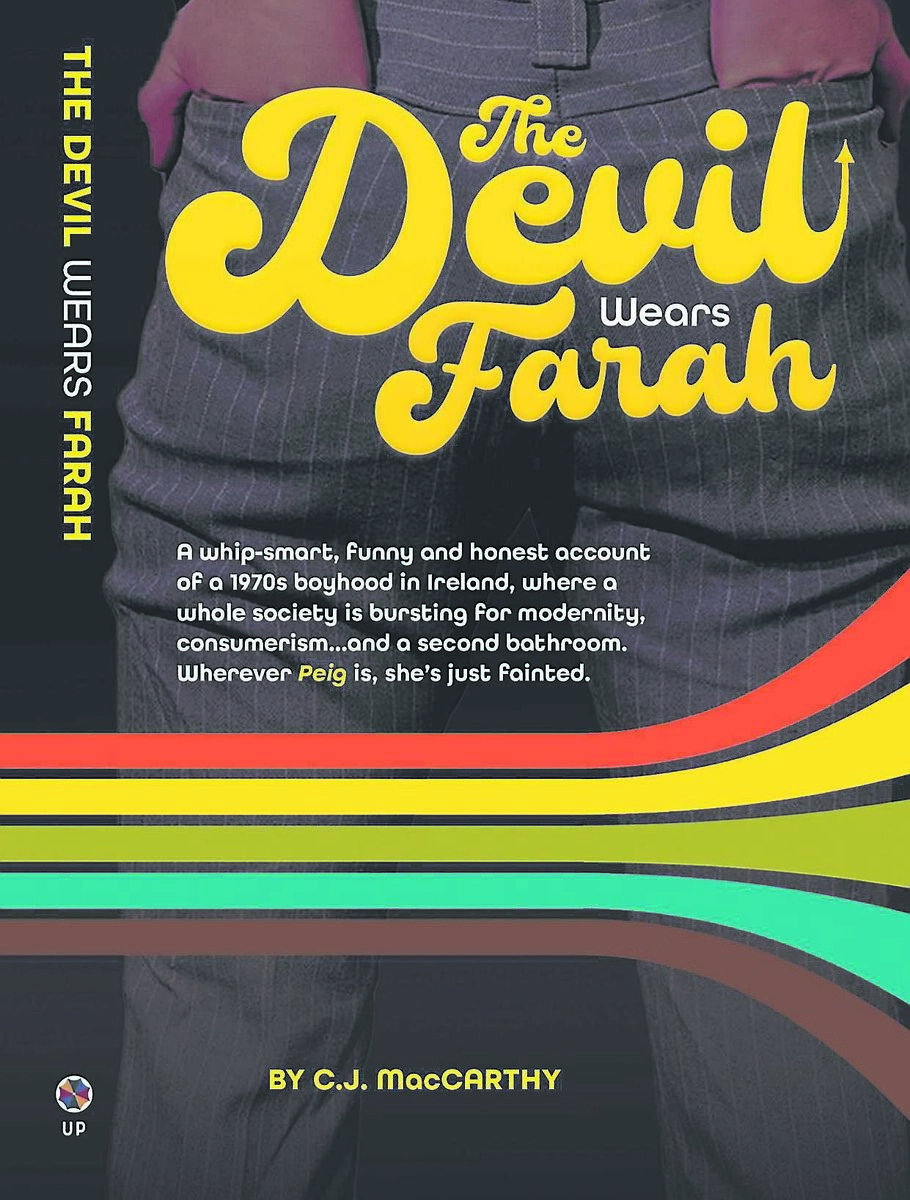
That’s honestly the level of motive I brought to my decision to write The Devil Wears Farah, an uproarious and “very funny” (Declan Lynch in the Sunday Independent) account of an Irish boyhood of the 1970s.
The more I thought about that era, the more two things presented themselves as indisputable: firstly, how intense our interior lives were; boredom was not just accepted but was, on some primal level, recognised as necessary. Boredom was the laying away of mental fat for a time of stimuli famine when it would be needed.
Staring for days out the window of a caravan in Ballybunion at summer rain - all talked out and without money for the Amusements - might bring on a state of absolutely silent, near hallucinogenic boredom that would make the highest state of Zen Bhuddism look like the clown car in Fossett’s Circus.
We had that. We had that ability to ‘go within’ without necessarily doing anything in there. It’s called ‘Mindfulness’ now, we’d have called it ‘Why don’t you read your book?’
The other thing that presented itself was the realisation, the epiphany, that came with understanding that - contrary to everything we believe now - Ireland and ‘those’ people were no more judgemental than we are. That they were doing their best and they weren’t any more mean-spirited or spiteful than we are.
And if judging people or situations or decisions is the new mortal sin - and it certainly seems to be - then why are we so quick to judge ‘that’ Ireland and ‘those’ people, our parents and grandparents?
There’s a paradox here that it’s going to take a smarter person than me to have a go at: How do we get to ceaselessly judge our parents’ society for being so judgemental?
I don’t know if the rest of ye are ready to hear this, but I’ll say it anyway: I’m not sure that they were that bad, and I’m absolutely sure that we’re not that good.
But this isn’t any kind of social anthropology, nor is it - and I need to say this categorically and as loudly I can write - not a misery memoir. It’s almost exactly the opposite: I want people to laugh out loud and smile as they recognise their own family’s variation on my theme.
It’s not overwrought or maudlin; I prefer warm and wry, but it is a little rude and scabrous.
The chapter about my adolescent awakenings is entitled Maxi, Dick & Twank, and if you’re offended by that, then this probably isn’t the book for you.
I want to contextualise that Ireland - our Ireland, my Ireland. Not excuse it. Not deny it. Not even rehabilitate it. But just to position it in contemporary terms and in a way that (I think and hope) people will find funny and true.
I don’t want preachy and heavy. I’m not a huge fan of ‘fine’ writing and tortuous analysis of motive and decision.
What I like is pace and fun and feeling with lots of pop-culture references that act as short-cuts for the literate reader to get where I want them to be.
I like self-deprecation, I like family dynamics and descriptions that others will pick up on and immediately recognise. I want people to read about my mother and hear - in their mind’s ear - their mother’s version of the same sentiment or warning or pleading or argument.
I grew up in a household that was geographically in Limerick, but spiritually in Cork. My father was from Macroom, and my mother’s people were from Ballydehob, with a detour to Dublin where she was born.
On special occasions, the Cork quotient was ramped-up, so we got the Holly Bough every Christmas, packed into a soggy cardboard box where the dead goose accompanying it had oozed a little.
Right beside the glassy-eyed bird - as if he might need a nibble or peck - was the Macroom delicacy: a caraway seed cake of the size, consistency and taste of the standard foot pouffe, and a little wooden box of Cork’s reply to the Ottoman Empire: Hadji Bey Turkish delight.
On a childhood drive past the shop on MacCurtain Street, we read aloud the ‘Hadji Bey et cie’ legend over the window and asked himself what ‘et cie’ meant. He referred us to the nearby train station and explained that the lads in CIE had chipped in with some advice about how to achieve the perfect jellied viscosity for Turkish Delight through their own mastery of diesel sludge and train axle grease.
There was about 30 seconds of silence before he laughed so much at his own ingenious fib that his eyes watered and he nearly crashed the car.
There’s an end of-era feel to a lot of Irish life now. Those of us born in the 1960s are pushing on.
The Ireland coming through now is practically unrecognisable to the Ireland that we came of age in - and in a way that goes beyond that ‘past is a different country’ cliché.
It’s so total and transformative that it seems that nothing of ‘that’ Ireland will survive, except caricature and wilful self-serving misunderstanding.
Can we have one last look at that Ireland before it goes gentle into that good night?
Can we try and remember the love and laughter and just park the time-travel indignation and judgement, for once?
If your answer to that is ‘Yes’, then you will genuinely enjoy The Devil Wears Farah.
Published by Umbrella Press





 App?
App?


