Cork author: Giving autistic people a voice is so important
A Cork co-author of a book aimed at making life easier for autistic people tells COLETTE SHERIDAN how her own experience of the condition has shaped her thinking
Cork author: Giving autistic people a voice is so important

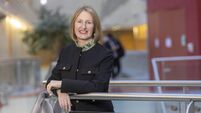
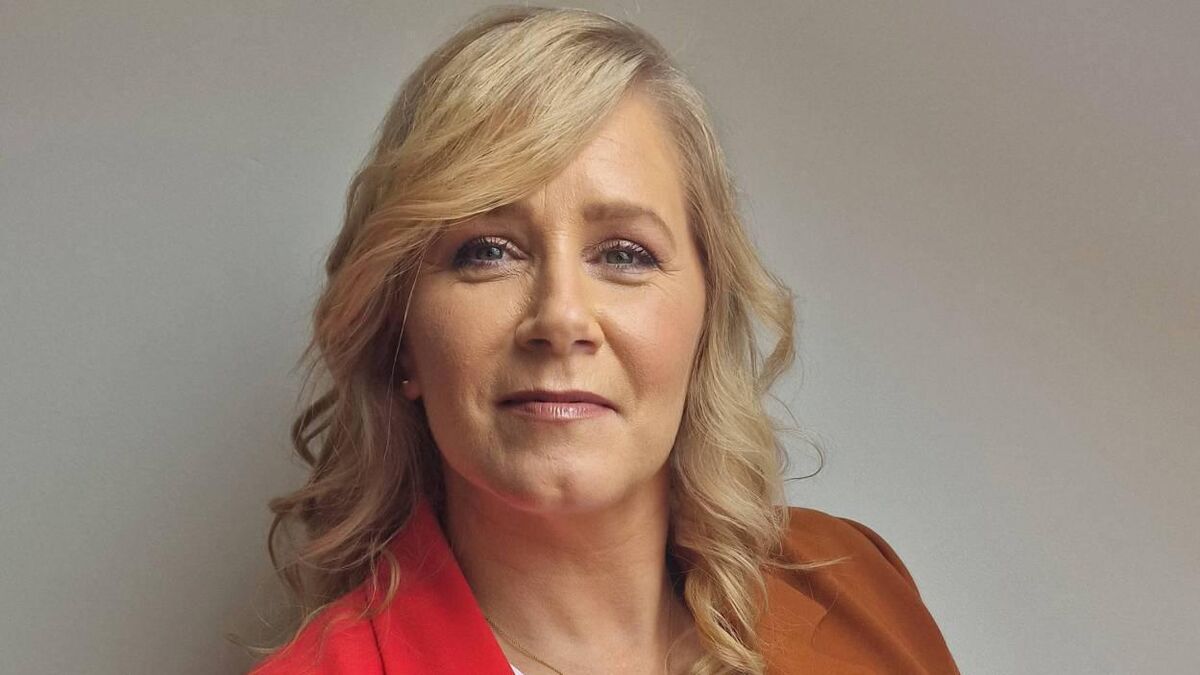
Sharon McCarthy who has co-authored 'Making Space For Autism: A Manual For Modifying Spaces For Autistic People.'

A NEWLY-published book, 'Making Space for Autism: Strategies for Assessing and Modifying Environments to Meet the Needs of Autistic People', focuses on how best to support an autistic person by changing their environment to ensure that it accommodates the person’s needs.

One of the authors, Sharon McCarthy, has been working in the autism field for over 20 years, currently lecturing at UCD and the Cork College of Further Education and Training.

She was herself diagnosed three years ago as autistic. Of her six children, five are neuro-divergent.

The other authors of the book are Sharon’s son, Caolán McCarthy, an autistic speech and language therapist and psychologist, Dr Micaela Connolly, who Sharon describes as an ally to autistic people.

“In the book, we’re looking at breaking down the environment into different component parts and looking at the accessibility of each component part, offering suggestions and a guideline on how to create accessibility for an autistic person, within different spaces,” says Sharon.

The components include the sensory aspect of the environment, the physical and emotional aspects. Communication is also looked at.

“If you’re an autistic person, dependent on the use of concrete language, it’s about people saying what they mean and meaning what they say. For example, rather than saying ‘Would you mind going over to close the door?’, an autistic person would benefit instead from you saying, ‘Please close the door’.

“An autistic person might be unable to access a space because it’s too loud and too busy. Or someone might touch an autistic person, unexpectedly. 

"Touch and the potential for 'unexpected' touch can be so overwhelming from both a sensory and an anxiety standpoint that it can prevent a person accessing spaces where they can engage with friends."

Sharon says that the book isn’t about autistic people having to conform and be like everybody else. It’s about being inclusive.

“When you think of a person with a physical disability who is a wheelchair user, they can become very disabled and can find themselves completely isolated if there isn’t a ramp to access a space, or a doorway isn’t wide enough for their wheelchair.

So, we’re looking at accessibility for the person who is autistic and potentially has difficulty in different areas. It can extend to strategies at work, public spaces, schools and health care settings to ensure the autistic person can access all of these spaces.

“There’s a huge autistic voice running throughout the book,” adds Sharon. “We were lucky to get a contribution from Dr Stuart Neilson (who is also autistic). He was one of my lecturers at UCC. He writes about how he experiences physical spaces and his hyper-vigilance, worrying about what might happen within a space.”

The book is aimed at a broad readership, including people working with autistic individuals or families that have an autistic child. As well as employees, it addresses employers.

“It’s for everybody really who might have the opportunity to ensure an autistic person can access your space without feeling distressed. It feels like empowerment, fitting the environment around the person.

"It's moving away from the medical model of disability where responsibility for a person's difficulties is considered theirs to the social model where responsibility for a person's difficulties is situated within the environment they are in."

By following the guidelines laid out in the book, autistic people will be able to use different spaces without worrying that something is going to go wrong.

Sharon is critical of this country’s failure to facilitate autistic people.

“There is a lot of stuff coming to the fore, particularly post-pandemic. Our kids and young people are under savage pressure to reintegrate, to go back into society and the workforce.

“But there isn’t a sufficient level of scaffolding or access to psychological support. There isn’t sufficient access to speech and language therapy and occupational therapy. 

Those with means can afford private services. Those without means are left sitting there.

There are “huge waiting lists” for assessments for autistic young people and adults, adds Sharon.

 “This is regardless of the fact that we have a disability act where it’s the right of the autistic child under 18 to be assessed within six months and not two or three years. In the context of adults, it’s way worse.

“If you are a person who identifies late as autistic, there are no services.”

Sharon points out that we have an ageing society that requires action. 

“With one in five people in Ireland saying they have a disability, according to the Census, if the government doesn’t create a provision of care and support for autistic people, both young and adult, it’s going to become a far greater problem.”

In a chapter in the book on ‘The Social Environment’ in Making Space For Autism, the school space is looked at.

“And when one considers the plethora of demands an autistic youngster faces each day, this thought process (of the expectation to be ‘neurotypical’) can be applied to practically every moment of th school day,” says Sharon, “whether a person is trying to move past another student’s chair on the way to the bathroom, is getting asked by the person next to them for a pencil, or is reading aloud in front of the class, organising and attending play dates, standing in line on the way in and out of the room...

Each of these moments is its own microcosm, with its own list of queries and clarifications.

In socialising, as in so many other things, autistic people are at their most comfortable when they have clarity - when there are clear, explicit guidelines, fixed outcomes, structure and predictability. And from a social standpoint, things are rarely, if ever, that simple.”

Making Space For Autism is available in most bookshops, and through pavilionpublishing.com and amazon.co.uk  and Outside the Box Learning Resources at otb.ie

More in this section

Stunning images that won awards for Cork photography club Stunning images that won awards for Cork photography club
My Weekend: 'I try to get out to literary festivals and gigs at the weekend' My Weekend: 'I try to get out to literary festivals and gigs at the weekend'
Documentary shines light on Cork family raising both Deaf and hearing children Documentary shines light on Cork family raising both Deaf and hearing children

Sponsored Content

SETU connects Ireland’s southeast to a changing Europe SETU connects Ireland’s southeast to a changing Europe
From graduate engineer to director: A 25-year career helping to shape Ireland’s electricity future From graduate engineer to director: A 25-year career helping to shape Ireland’s electricity future
Brian Brennan, Tax Partner at KPMG in Ireland, President of Irish Tax Institute Budget 2027 should mark the beginning of tax simplification, says KPMG
Contact Us Cookie Policy Privacy Policy Terms and Conditions

© Examiner Echo Group Limited

Add Echolive.ie to your home screen - easy access to Cork news, views, sport and more