Cork author: I started writing at just 12

William Wall Picture: Liz Kirwan
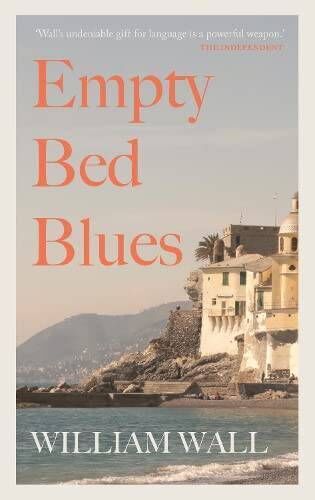
WILLIAM Wall’s latest novel, Empty Bed Blues, is set in Italy. As I chat to him via Zoom, I remark on his lovely Italian backdrop, asking him how often he travels there. He answers in the plural, including his wife Liz throughout.
“We spend half the year here now. We came for our honeymoon in 1979. Back then it was all package holidays and we picked the cheapest honeymoon we could find, which was Hotel Alaska in Rimini. When we arrived the owner told us they had overbooked, so we ended up spending the first three nights of our honeymoon in bunkbeds!”
It makes sense that Wall speaks about himself in the context of his wife. It sets the tone for what is to come: the retelling of a writer’s life ‘blessed amongst women’.
“We loved Italy. We couldn’t afford to go back there again for donkey’s years but when we did, it was the same love affair all over again.”
It is unsurprising then that Empty Bed Blues, his latest novel, is written from the perspective of an Irish woman. It is only on the death of her husband that Kate Holohan discovers his huge debts. She escapes to Italy, avoiding an irate sister, also stung by her late husband’s financial misadventures, to the love nest he had tucked away in a sleepy village with his mistress. There she meets a wise and unconventional Italian woman called Anna Ferrara, who offers her solace and another way of seeing the world.
I question William on whether he knows women well enough to speak as one, in a novel heavily populated by them.
I’m very conscious of cultural appropriation. I think distance matters. I would never make a central character a refugee from Morocco for instance.
"It is too far removed. But I’m married since 1979, like I say. If I hadn’t learned something along the way about women there would be something very wrong.”
His philosophy on writing women runs deeper than his personal relationships, however.
“Men and women are not really that different. The neurophysiology of men and women is not that different. Experts are clear on that.”

“And you even dare to write about Kate’s sexuality,” I persist.
“Well yes, why not? Everybody’s sexuality is different and individual. But I am very receptive to my wife telling me what a woman would or would not do or say. I’m guided by that. I think we should be able to imagine what it is like to be one another. If we think about it, we know about it more. I think it’s terribly important actually.”
Wall recalls how his mother gave him his first start in his writing life.
“I started writing poetry at 12. I contracted a disease called Stills disease. I still live with it today. I was six months in hospital, which is hard to imagine now. Then I spent a whole year at home and my parents just fed me books. I began writing my own adventures and started writing poetry first.”
Little did the young William Wall know what his mother was up to.
“When I was about 15, my mother collected the whole lot and posted it off to John B Keane. She had heard him on the radio.
He wrote back a week later with a cheque for ten pounds for a new prize he had recently devised.
"I don’t think it was ever awarded again, or if it was it was awarded to lots of other people in secret,” Wall jokes.
His parents brought him to Listowel Writers’ Week every year after that.
“She would sit in the car reading while may father went off fishing. They read a lot but they wouldn’t have had much interest in writing. They brought me because they knew I loved it. I was very fortunate with my parents. They were wonderful.”
Wall captures the women in his book superbly, a testament to how he sees men and women as having more in common than not.
He says he feels a little guilty about how villainous the sister character comes across. Even with his ‘baddie,’ he shows empathy.
“The sister character just came out that way. I’ve thought about doing a sequel to return to her. In fairness, though, you can see her point of view. She half blames Kate for what has happened to her family.
“You are getting Kate’s point of view of her sister in the book and even that is complex. She remembers her sister looking after her when she was young, for instance. There are other sides to her sister’s character too.”
First Reader
Interestingly, Wall begins our conversation by sharing a story from Dante’s Inferno, which he first heard on that inaugural trip to Rimini. It describes a man and woman falling in love over a book. This love of literature and this camaraderie is clearly mirrored in his relationship with his wife.
“Liz is my first reader. She is a mathematician and an acute editor. Maths is also very creative.”
He even attributes his career as a secondary school English teacher in Pres to his wife.
“Brother Joe, who I greatly admired as an educator, wanted to hold onto my wife. I was offered a job in Greystones and he knew if I took it, he’d lose her. So he offered me the job.”
The two worked together in the school for many years and completed PhDs in UCC. Over the pandemic, they read Ulysses aloud to one another.
William Wall will be at the West Cork Literary Festival on July 12 at 1pm in Bantry Library. His latest novel, Empty Bed Blues, is published by New Island Books.


App?