Rural outrage at slow roll-out of broadband in Cork
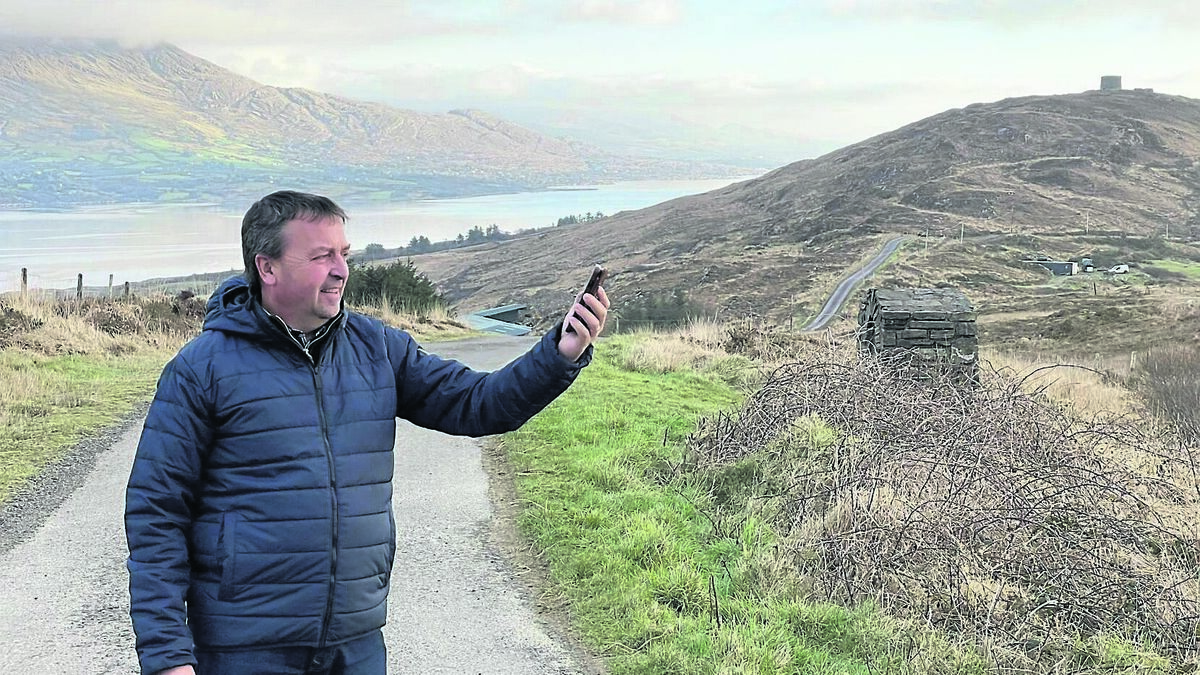
SENSE OF DISCONNECT: John Walsh tries to get a signal on Bere Island
PARTS of rural Cork may not get fibre broadband connections before 2030.
That was the stark message delivered to councillors in West Cork recently by Louis Duffy, Director of Environment and Emergency Services at Cork County Council.
Now, residents and business people there have told The Echo about their concerns over the slow pace, and the impact this is having on their lives.
Mr Duffy was presenting a report on the progress of the National Broadband Plan in Cork, and warned that with many areas not due to be surveyed for two or three years, actually getting connected for these areas would take even longer.
“With the programme not scheduled to start in some areas until 2025 or 2026, there is every risk that some of these premises may not be served in the next decade,” he said.
“Unfortunately, we in the County Council have no control over the situation. All we can do is continue to make representations.”
Some 67,000 premises in County Cork are part of the National Broadband Plan, which aims to supply a future-proofed high speed connection that will initially provide minimum download speeds of 500 mbs to areas where it is not commercially viable for private operators to do so.
Currently, work is being carried out in Carrigaline, Midleton, Youghal and near the county bounds at Rathmore. Many other areas, however, face a wait of years before they are even surveyed.
In the meantime, community centres across the county are being connected in advance, to provide Broadband Connection Points with public access higher speed broadband, but many councillors in West Cork are not impressed with the rate of progress.
Kinsale-based Cllr Kevin Murphy said, “To be only surveying in 2025 is totally unacceptable, if people will have to wait until 2030 or even later before they can get a decent service well, that is just outrageous.
“This is going to set us back years and years and we really need to protest about this.”
Skibbereen-based Fianna Fáil councillor Joe Carroll said: “There is big demand out there. More and more people are working from home since the lockdown, and many of them want to stay working from home, but without proper broadband that just isn’t possible.”
The lockdowns imposed by Covid-19 placed the lack of broadband in rural areas under further scrutiny. With many people having to work from home, the environmental and societal benefits of home working have led to demands for more flexibility from employers.
The Government has just published details of a new law set to offer workers the right to request home working, but it also includes several grounds on which employers can refuse such an application, including “concerns re the internet connectivity of the proposed remote working location”.
For many, remote working will not be a realistic option for many years.
John Walsh is Project Coordinator at the Bere Island Projects Group, where the island community has been struggling with inadequate broadband for years. There are about 75 occupied homes on the island and a similar number of holiday homes.
“We were told before that we would have a wireless connection for the island in 2022 but the National Broadband Plan now seems to have superseded that,” said Mr Walsh.
“We are relying on 4G phone connections mainly, but it’s very patchy. At the east end of the island it’s a real blackspot and you can’t even get decent mobile phone coverage most of the time. It’s very frustrating for people.”
Mr Walsh said the island’s exchange was upgraded about 15 years ago and there are modern lines serving the properties, but there is no high speed connection to the mainland.
“We had meetings with eircom in Castletownbere and we were ready to lay a cable across the the island ourselves, but now, because of the National Broadband Plan, we can’t do that and we have to wait until they reach us - and who knows when that will be?” he said.
“We have looked at various funding options and potential solutions but there is no joined up thinking, there doesn’t seem to be any plan. This is a make or break issue for rural communities like ours and the way things are at the moment, it looks like it won’t be solved for years,” he added.
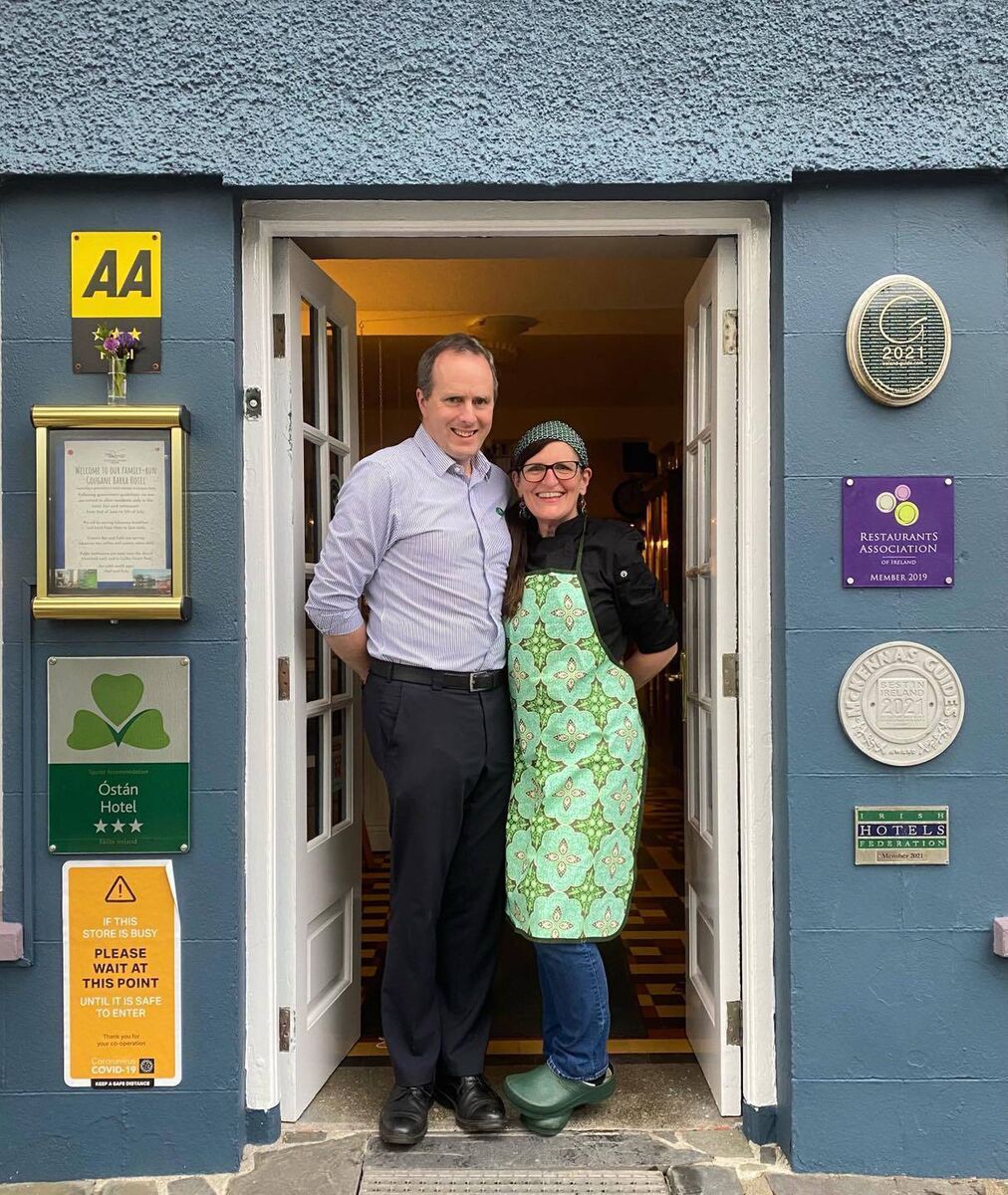
In picturesque Gougane Barra, Neil Lucey, owner / manager of the Gougane Barra Hotel, tells a similar story of struggling for years to try and get a decent connection.
“We have tried all sorts of solutions and it has been a major headache for us for many years,” he said. “We are here in this beautiful location but we are also right at the end of the line when it comes to broadband.”
He added: “We’ve tried all sorts of solutions and all sorts of providers over the years with varying degrees of success. We ended up setting up our own system running a cable up the hill and then using a fixed wireless signal to my daughter’s house 8km away!”
Mr Lucey has recently stated using Elon Musk’s Starlink satellite system, which has made a major difference.
“It has been a game changer. It’s the first time we’ve had a decent high speed service.
“As for the National Broadband Plan, we will be waiting years before they get here, if they ever do.
“This is an essential service now, like transport or water, and it should be prioritised in the same way.
“We all need access to high speed broadband for business and for home,” he added.
Satellite may be the best option for many remoter locations in the meantime - as well as Starlink, Amazon, Oneweb and Telesat services are all due to be available in Ireland soon, and there have been calls to make grants available to help with the cost of installing such systems.
Satellite options, though, are unlikely to be able to provide the higher speeds ultimately promised by the National Broadband Plan fixed lines.






 App?
App?


