Dyslexia is a part of who you are

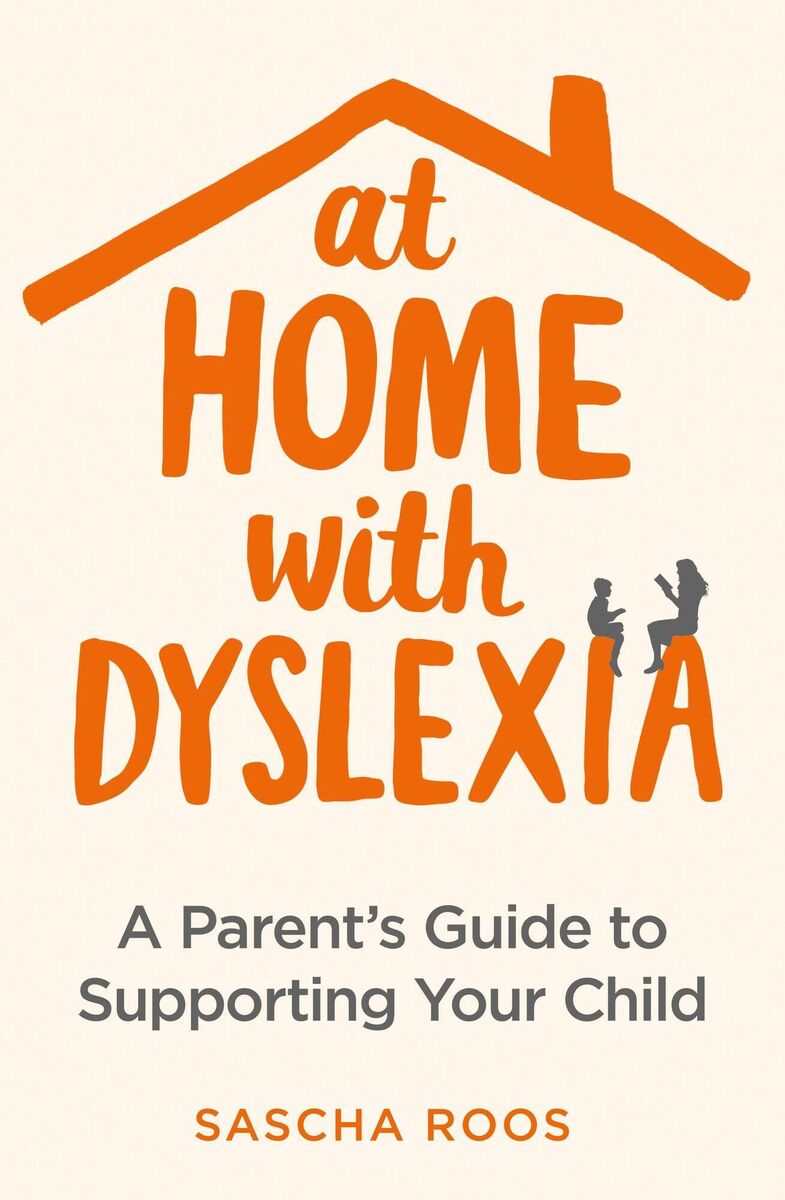
“DYSLEXIA should be seen as a different learning ability, rather than a disability,” so says Sascha Roos, author of At Home With Dyslexia.
Sascha felt right at home when she came to Cork from Cambridge 20 years ago to teach English in a language school and trained as a Guidance Counsellor at University College Cork.
“A friend suggested that I become a dyslexia tutor,” says Sascha. “So I did a training course with the Dyslexia Association of Ireland and set up my own private practice.”
Sascha says that people with dyslexia have a different way of seeing the world with different ability.
“Many people who have dyslexia are at the top of their game in all fields,” says Sascha.
“This is not in spite of having dyslexia; but because of it. Many are good at problem solving and many are entrepreneurial and inventors. Through brain scanning techniques, neuroscience can show how the dyslexic brain is more active in the right hemisphere.
“So the challenges for someone with dyslexia are largely due to these differences with the left hemisphere and the areas of the brain that deal with language skills — the process of enabling reading and writing does not work as efficiently as for the non-dyslexic brain.”
It used to be called word blindness years ago? An older relative of mine said his school-days were not the best days of his life as he struggled with reading and writing.
“Yes. Dyslexia was often misunderstood and it wasn’t diagnosed,” says Sascha. “The most important aspect of dyslexia to remember is that it is a pattern of weaknesses and strengths, a processing difference.
“Dyslexia should be seen as a different learning ability rather than a disability. Dyslexia is not something you suffer with,” says Sascha. “It is part of who you are.”
One in 10 of us have dyslexia, and the 1% has potential in abundance. Winston Churchill, Agatha Christie, WB Yeats, Richard Branson, Steven Spielberg, Bill Gates and Steve Jobs, all live or have lived, with dyslexia.
“People with dyslexia are usually great problem solvers,” says Sascha.
Breaking down stereotypical assumptions and providing guidance for those affected by dyslexia was the driving force behind Sascha’s book.
How do parents know if their child is dyslexic?
“They must trust their gut feeling,” says Sascha. “And there is always a genetic link. Look at the family, then pursue with the school.
“It is a good idea to talk to teachers. They might tell you the child is doing fine. People with dyslexia are bright and articulate so it is often not picked up.
“Short term memory and a poor working memory are often noticed. Reading, spelling and retention can pose problems. Especially learning times-tables and learning spellings. You often find young children have five spellings to learn off for their homework. Children with dyslexia may struggle to do that.
“If parents believe their child has a lot of potential, but is struggling with routine classroom tasks, then they should seek professional help. Often, behavioural problems are spotted first at school. Sometimes the parent must seek private professional help for their child.”
People with dyslexia are often hard workers.
“Even though people with dyslexia have above average IQs, they often work four times harder than anyone else, just to keep up,” says Sascha. “They need more time to process information, to read, and to get things down on paper. The skill of reading can be a huge challenge, which can affect the person with dyslexia throughout his or her life. However, early recognition and intervention can make an enormous difference.”
Sascha takes a holistic approach.
“I deal with the whole person, their self-esteem, as well as approaches to learning,” she says.
“That usually includes giving people tools to help them imprint on their brains, information that is essential in their day-to-day lives.
“Post-Its with key words on them on the walls, for instance, help the child to be free to move around, examining the Post-Its and singing or drumming the words to remember them. It is finding whatever works best for them. Others find it helpful to do something tactile while studying, like origami. My focus is multi-sensory,” says Sascha.
The individual can thrive with the correct guidance.
“Finding a learning style, an alternative way, to suit the student and to maximise their creative abilities is what I concentrate on,” says Sascha. “Encouraging their own multi-sensory learning style and tapping into their inherent creativity will help them on a smooth progression through school and beyond.”
People with dyslexia talk a lot don’t they? Teachers often see them as being disruptive in class.
“Yes,” says Sascha. “People with dyslexia fidget a lot. They like to move around and yes, they do talk a lot!”
Some lack self-confidence.
“So much of the damage to self-confidence and self-image later on can be avoided and emotional and behavioural problems prevented, if prompt and appropriate intervention is made in early childhood,” says Sascha.
“An educational psychologist’s assessment is often daunting, but it just means a professional can administer tests that will find your child’s IQ and any discrepancies between abilities in some areas and weaknesses in others, which then do not correspond with your child’s overall intelligence or above-average IQ.
The assessment aims to gather as much information as possible on your child. Don’t delay in exploring the range of supports open to your child.”
Parents need to be advocates for their children.
“Parents need to ask what supports their child can get at school,” says Sascha. “They need to constantly remind teachers that their child has dyslexia, and they need to educate themselves so they can educate the teachers about dyslexia.
“The teen with dyslexia can access the written word via ever-advancing technologies, such as laptops and spelling and grammar apps, speech-to-text software and hand-held spell checkers.”
People with dyslexia are high achievers.
“They succeed because they are used to working hard already,” says Sascha. “They excel in their own niche.”
Sascha’s book, At Home with Dyslexia, takes into account that parents’ needs are very different from the professionals: the book focuses on parents’ concerns at each stage of the dyslexia child’s development, from early primary years to the exam years at secondary school, also encapsulating the emotional aspects of dyslexia.
“Think different ability, not disability,” says Sascha.
See Sascha’s website: dyslexiasupport.ie
At Home with Dyslexia, by Sascha Roos costs €15 from Waterstones and Easons and is also available on Amazon.
The Dyslexia Association of Ireland (DAI) is asking people to tweet, comment and engage with Dyslexia Awareness Month using hashtag #ShoutAboutDyslexia or #TeamDyslexia sharing stories, and driving public understanding of the condition. For more information on dyslexia visit: www.dyslexia.ie






 App?
App?


