World’s smallest and rarest wild pigs put in virus lockdown
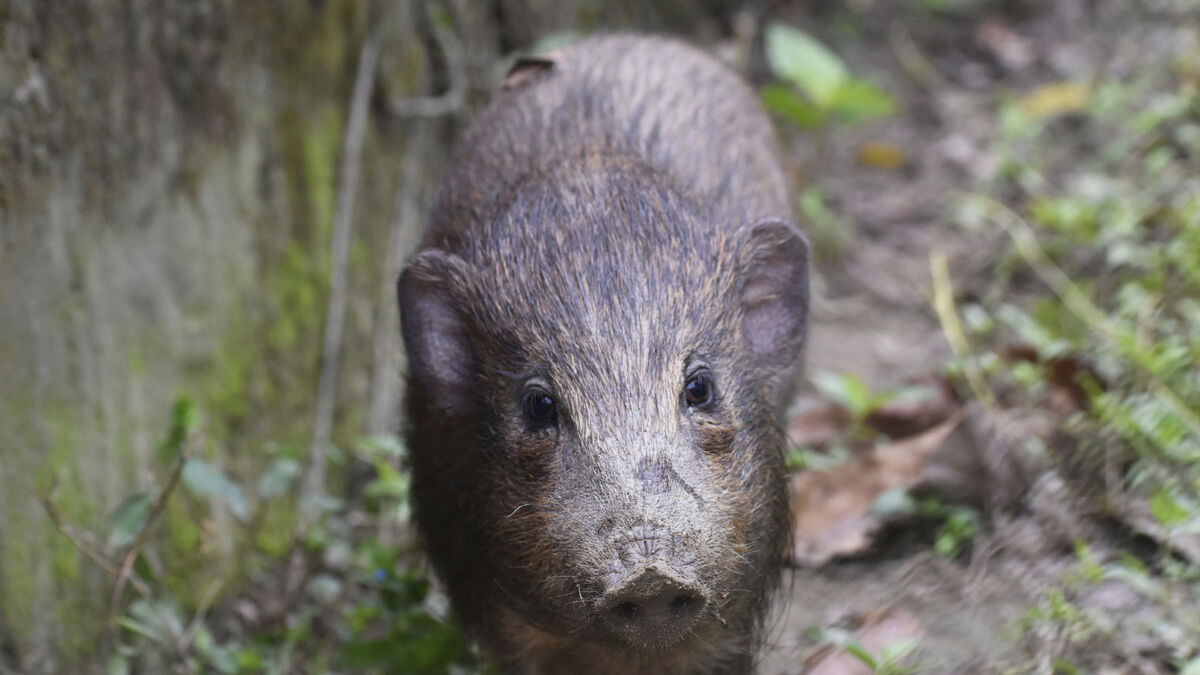
Pygmy hogs, the world’s smallest and rarest wild pigs, are under a virus lockdown – but not because of Covid-19.
They are instead affected by the first outbreak of African swine fever in India, for which there is neither a vaccine nor a cure.
The highly contagious viral disease has already killed more than 16,000 domestic pigs, Pradip Gogoi, an official at Assam state’s animal husbandry wing, said.
It is very scary - it can wipe out the whole population
Parag Deka, Pygmy Hog Conservation Programme
The shy, 10-inch tall pygmy hogs suffered severe habitat loss and were thought to be extinct in the 1960s.
Then, in recent decades, a captive breeding programme and other conservation efforts have brought the species back.
Now there are nearly 300 animals living in pockets of the north-eastern state of Assam but scientists fear the virus could destroy the still-endangered population.
After authorities confirmed the swine fever outbreak reached India on May 18, scientists virtually locked down the breeding centres and adopted strict precautions.
Parag Deka, who heads the Pygmy Hog Conservation Programme run jointly by Indian authorities, the UK-based Durrell Wildlife Conservation Trust and local non-profit organisation Aaranyak, said: “It is very scary – it can wipe out the whole population.”
The virus spreads mainly by direct contact between pigs, through infected meat or contaminated material – and a vaccine is realistically two or three years away, Linda Dixon, who has been researching the virus at The Pirbright Institute in the UK, said.
The virus kills almost all infected pigs, she said.
“It can decimate populations of wild pig or domestic pig,” she added.
“It could be very bad.”

At the breeding centres at Nameri and the state capital Guwahati, where there are 82 pigs and piglets, scientists have erected two parallel security fences.
No visitors are allowed and cars cannot park there.
Some staff members who live off-site need to leave their shoes at the entrance.
Then they must shower, wash their hands and feet, dip their feet in anti-viral solution and don fresh shoes to go inside.
“This is the new normal,” Mr Deka said.
The virus threat also means a change of diet for the pigs.
While fruit and grains are still on the menu, vegetables that grow underground such as tapioca and sweet potatoes have been off limits because the virus survives longer in soil.
Keeping the pygmy hogs and the breeding centres secure is especially important now, Mr Deka said, because officials say the virus has already began spreading in wild boars in the region, making the contagion more difficult to contain.
Even though Mr Deka said he is preoccupied with swine fever, the coronavirus pandemic has dried up funding desperately needed for the new bio-security measures and staff training.
Some charities said they can no longer afford to give aid, while revenue from the zoo run by Durrell Wildlife Conservation Trust has also dipped.
“I believe that when you make a change, it will be hard in the beginning, messy in the middle and good at the end,” he said.
“Right now, we are between the hard and messy stage.”







 App?
App?